AFRICOM Commander Holds Security Talks with President Tinubu in Abuja
The Commander of the United States Africa Command (AFRICOM), General Dagvin R.M. Anderson, led a high-level delegation on a courtesy visit to President Bola Ahmed Tinubu at the State House, Presidential Villa, in Abuja on Sunday, February 8, 2026.The meeting, which focused on deepening security cooperation between Nigeria and the United States, brought together top Nigerian security officials and senior U.S. representatives amid ongoing regional threats including terrorism, banditry, and transnational crime.From the U.S. side, the delegation included:Charge d’Affaires of the U.S. Embassy in Nigeria, Keith Heffern Commander AFRICOM, General Dagvin Anderson Senior Foreign Policy Adviser, AFRICOM, Ambassador Peter Vrooman Command Sergeant Major and Command Senior Enlisted Leader, AFRICOM, Garric M. Banfield President Tinubu was accompanied by key Nigerian security leaders, including:National Security Adviser, Nuhu Ribadu Minister of Defence, Gen. Christopher Musa (Rtd) Chief of Defence Staff, General Olufemi Oluyede Chief of Army Staff, Lt.-Gen. Waidi Shaibu Chief of Defence Intelligence, Lt.-Gen. Emmanuel Uandiandeye Director-General, National Intelligence Agency, Mohammed Mohammed Director-General, Department of State Service, Tosin Ajayi The visit comes in the context of strengthened U.S.-Nigeria military collaboration, following discussions between General Anderson and President Tinubu in Rome late last year. That engagement paved the way for increased joint efforts, including the recent deployment of a small U.S. military team to Nigeria to provide specialized capabilities, such as intelligence, surveillance, and reconnaissance (ISR) to support Nigeria's ongoing counterterrorism operations.While specific details of Sunday's discussions were not publicly disclosed, the meeting is widely regarded as part of sustained efforts to enhance bilateral defence ties, address shared security challenges in West Africa, and build on recent coordinated actions against terrorist groups in the region.
 Admin



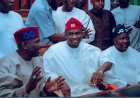
The Commander of the United States Africa Command (AFRICOM), General Dagvin R.M. Anderson, led a high-level delegation on a courtesy visit to President Bola Ahmed Tinubu at the State House, Presidential Villa, in Abuja on Sunday, February 8, 2026.
The meeting, which focused on deepening security cooperation between Nigeria and the United States, brought together top Nigerian security officials and senior U.S. representatives amid ongoing regional threats including terrorism, banditry, and transnational crime.
From the U.S. side, the delegation included:
Charge d’Affaires of the U.S. Embassy in Nigeria, Keith Heffern
Commander AFRICOM, General Dagvin Anderson
Senior Foreign Policy Adviser, AFRICOM, Ambassador Peter Vrooman
Command Sergeant Major and Command Senior Enlisted Leader, AFRICOM, Garric M. Banfield
President Tinubu was accompanied by key Nigerian security leaders, including:
National Security Adviser, Nuhu Ribadu
Minister of Defence, Gen. Christopher Musa (Rtd)
Chief of Defence Staff, General Olufemi Oluyede
Chief of Army Staff, Lt.-Gen. Waidi Shaibu
Chief of Defence Intelligence, Lt.-Gen. Emmanuel Uandiandeye
Director-General, National Intelligence Agency, Mohammed Mohammed
Director-General, Department of State Service, Tosin Ajayi
The visit comes in the context of strengthened U.S.-Nigeria military collaboration, following discussions between General Anderson and President Tinubu in Rome late last year.
That engagement paved the way for increased joint efforts, including the recent deployment of a small U.S. military team to Nigeria to provide specialized capabilities, such as intelligence, surveillance, and reconnaissance (ISR) to support Nigeria's ongoing counterterrorism operations.
While specific details of Sunday's discussions were not publicly disclosed, the meeting is widely regarded as part of sustained efforts to enhance bilateral defence ties, address shared security challenges in West Africa, and build on recent coordinated actions against terrorist groups in the region.