
The Politics of Trust: Dr. Sani Danjuma, Executive Leadership and the Responsibilities of Public Service
An opinion article examining Dr. Sani Danjuma's role as Principal Private Secretary to Kano State Governor Abba Kabir Yusuf, highlighting the importance of trust, professionalism, administrative loyalty and accountability in executive leadership and public service.
 Admin
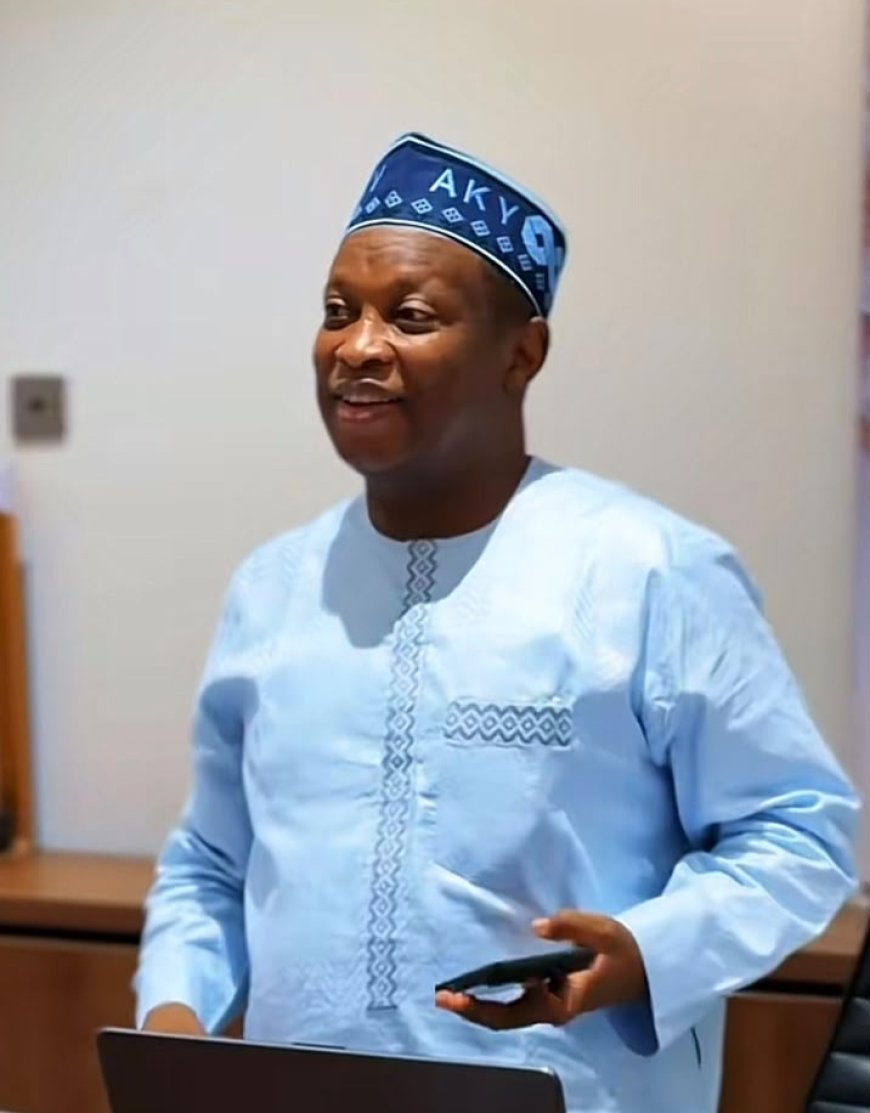
By Muhammad Zango
In the complex world of political leadership, trust remains one of the most valuable yet demanding elements of effective governance. It is an asset that cannot be secured through titles, proximity to authority, or political association alone. Rather, it is built through consistency, professional conduct, discretion, sound judgment, and the ability to understand the responsibilities that accompany public office.

Within the executive structure of Kano State, the office of the Principal Private Secretary occupies a position that makes these qualities particularly relevant. It is in examining the relationship between political leadership and administrative responsibility that the professional role of Dr. Sani Danjuma becomes an interesting subject of public discussion.
Serving as Principal Private Secretary to Governor Abba Kabir Yusuf, Dr. Danjuma operates within an administrative environment where trust, coordination, communication, and professionalism are essential considerations.
TRUST IS MORE THAN PROXIMITY TO POWER
There is a tendency in political discourse to associate individuals who work closely with political leaders exclusively with their proximity to power. However, such an interpretation overlooks the actual demands of executive administration.
Working within the immediate administrative environment of a governor is not simply about occupying a privileged position. It involves understanding the institutional expectations of the office, respecting administrative procedures, managing official responsibilities, and recognising the importance of confidentiality.
Trust, in this context, is not merely a personal relationship. It is an administrative responsibility.
An individual entrusted with an important executive assignment must understand that every official engagement, communication, and administrative obligation carries implications for the institution being served.
This is why professionalism must always accompany political trust. Without competence, trust becomes vulnerable; without responsibility, authority loses its institutional value.
THE IMPORTANCE OF ADMINISTRATIVE LOYALTY
Loyalty is frequently discussed in political circles, but its meaning deserves a more thoughtful interpretation.
In public administration, genuine loyalty should not be confused with unquestioning personal allegiance. It should be reflected in commitment to lawful responsibilities, respect for institutional procedures, honesty in communication, and dedication to the objectives of government.
An effective administrative officer must be capable of supporting executive leadership while maintaining professional judgment and respect for established rules.
This distinction is important because government is an institution, not a private arrangement. Public appointments carry obligations that extend beyond individual relationships.
For Dr. Sani Danjuma, his position provides an opportunity to demonstrate the importance of combining professional loyalty with institutional responsibility. His academic background, including his reported experience in university teaching and departmental administration, offers an additional dimension to his professional profile.
The value of such experience ultimately rests on how effectively knowledge and administrative discipline are applied to the responsibilities of public service.
THE GOVERNOR’S OFFICE AND THE DEMANDS OF EFFECTIVE GOVERNANCE
The effectiveness of an executive administration is influenced by several interconnected institutions and individuals. While the governor provides political direction and leadership, the successful coordination of government business depends on the contributions of various administrative offices.
The Principal Private Secretary is part of this wider administrative arrangement.
The position requires an appreciation of competing priorities, effective communication, organisational discipline, and the ability to handle official responsibilities with appropriate care.
These demands become particularly significant in a state like Kano, where the political environment is active, public expectations are considerable, and the responsibilities of government extend across numerous sectors.
Consequently, the importance of the office should be assessed through its contribution to administrative efficiency rather than simply through its proximity to the seat of executive authority.
A strong administrative structure does not necessarily attract the same attention as political announcements or public ceremonies, but its importance to institutional functioning should never be underestimated.
THE INTELLECTUAL DIMENSION OF PUBLIC SERVICE
One interesting aspect of Dr. Danjuma’s professional background is his reported experience in academia, including service as a senior lecturer and Head of the Department of Computer Science at Northwest University, Kano.
This experience introduces an important subject into the discussion of public administration: the relationship between intellectual preparation and executive responsibility.
Academic institutions cultivate analytical thinking, research discipline, problem-solving, and the systematic evaluation of information. These qualities are also relevant to administrative environments, where decisions and responsibilities often require careful consideration.
Of course, academic qualifications alone do not automatically establish administrative excellence. Professional competence must be demonstrated through performance.
Nevertheless, the movement of individuals with academic and professional experience into government provides an opportunity to bring different perspectives and approaches to public administration.
The important question is how effectively such experience is translated into institutional value.
PUBLIC OFFICE MUST ALWAYS BE ABOUT SERVICE
Perhaps the greatest challenge facing anyone entrusted with public responsibility is remembering that the office exists to serve an institution and, ultimately, the public.
Political environments can sometimes place excessive emphasis on titles, recognition, access, and influence. Yet these considerations should never overshadow the fundamental purpose of public service.
Every appointment comes with expectations. Every responsibility creates an obligation. Every opportunity to serve should be approached with an understanding that public confidence is earned through conduct and performance.
For this reason, the reputation of a public official should not be built exclusively around political associations or public appearances. It should be supported by evidence of professionalism, responsible conduct, and meaningful contributions to the institution.
This is the standard by which public service becomes more than a position and develops into a record worthy of recognition.
BEYOND THE POLITICS OF PERSONALITY
Kano’s political and administrative environment requires more than personalities competing for attention. It requires institutions that function effectively, officials who understand their responsibilities, and individuals who appreciate the importance of collective governance.
The discussion surrounding Dr. Sani Danjuma should therefore be situated within this broader understanding.
His position as Principal Private Secretary provides a platform for examining the importance of administrative coordination and the professional demands of serving within the executive structure.
His academic and administrative background adds another dimension to that conversation.
Ultimately, however, the enduring significance of any public appointment must be established through the quality of service rendered and the institutional value created.
CONCLUSION: TRUST MUST BE JUSTIFIED BY PERFORMANCE
Political trust may open the door to responsibility, but it is professional conduct that sustains credibility.
The responsibilities associated with executive administration demand individuals who understand the difference between access and authority, loyalty and personal interest, as well as political association and public responsibility.
Dr. Sani Danjuma’s position in the Kano State Government places these principles at the centre of an important public-service discussion.
Beyond the designation, beyond political proximity, and beyond the visibility that accompanies Government House appointments, the real measure of professional relevance remains the ability to discharge responsibilities with competence, discretion, integrity, and a commitment to institutional effectiveness.
In the final analysis, the strongest legacy of public service is not the power one enjoys, but the responsibility one fulfils.
That is the true politics of trust.