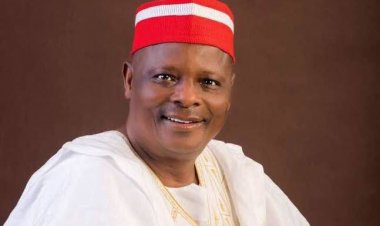
Beyond the Gatekeeper: Dr. Sani Danjuma and the Intellectual Dimension of Executive Administration
An opinion article exploring Dr. Sani Danjuma's academic background, his role as Principal Private Secretary to the Kano State Governor, and the importance of professionalism, intellectual capacity and accountability in executive administration.
 Admin
By Muhammad Zango
In the architecture of government, some positions attract public attention because of the authority they carry, while others derive their significance from the responsibilities they discharge behind the scenes. The latter category requires a particular combination of intellectual capacity, administrative discipline, discretion, and an understanding of the intricate relationship between leadership and governance.

The office of the Principal Private Secretary to the Governor of Kano State belongs to this important category. It is within this context that the professional background and present responsibilities of Dr. Sani Danjuma deserve closer examination.
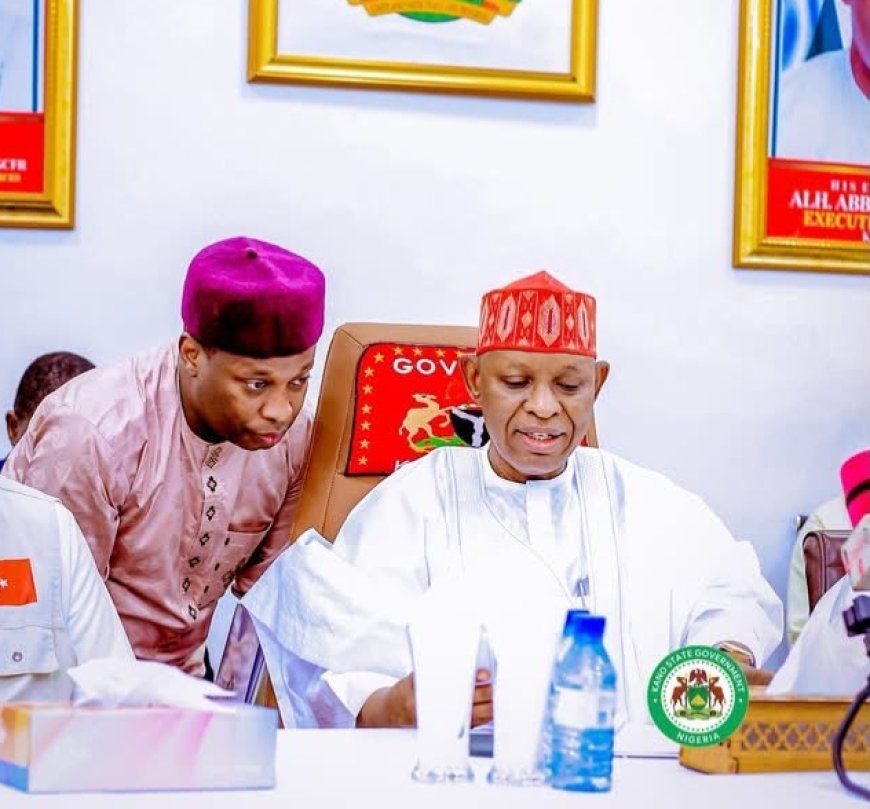
Currently serving as Principal Private Secretary to the Executive Governor of Kano State, Alhaji Abba Kabir Yusuf, Dr. Danjuma occupies a position within the Government House structure that places him at the intersection of executive administration, communication, and institutional coordination. His professional journey from academia into government offers an opportunity to reflect on the value of intellectual preparation in public service.
FROM THE CLASSROOM TO THE CORRIDORS OF GOVERNMENT
Before entering the administrative circle of the Kano State Government, Dr. Danjuma served as a senior lecturer and Head of the Department of Computer Science at Northwest University, Kano, according to published accounts of his career.
This background is significant because academia and government, despite their different operating environments, share an important requirement: the ability to analyse problems, organise information, evaluate alternatives, and make reasoned judgments.
Academic life demands intellectual discipline and a commitment to understanding complex subjects. Executive administration, on the other hand, requires the application of sound judgment within an environment shaped by competing priorities, institutional procedures, and the demands of public responsibility.
The transition from one environment to the other is therefore worthy of attention. It illustrates the broader principle that public administration benefits when professional knowledge is accompanied by practical competence and a clear understanding of institutional responsibilities.
Dr. Danjuma’s academic experience provides a documented part of his professional background. The extent to which that experience has translated into particular administrative achievements, however, is best assessed through specific records of his work in government.
UNDERSTANDING THE IMPORTANCE OF THE PRINCIPAL PRIVATE SECRETARY
One of the persistent misunderstandings about government is the tendency to evaluate public offices exclusively by their visibility or formal authority.
Yet effective administration depends on more than the decisions announced at public events. It also requires organisation, reliable communication, the management of official information, and the coordination of competing demands on executive attention.
The Principal Private Secretary operates within this administrative environment. The position requires professionalism, discretion, attention to detail, and an understanding of the importance of timely and accurate communication.
Where these responsibilities are effectively discharged, they can help an executive office operate in a more organised and coordinated manner. Where they are neglected, even well-intentioned leadership can encounter avoidable administrative difficulties.
This is why the significance of the office should not be measured simply by its proximity to the governor. Its real value lies in the quality of the responsibilities performed and the contribution those responsibilities make to the functioning of government.
In Dr. Danjuma’s case, the public record establishes his position within the Kano State Government. A comprehensive assessment of his performance should equally consider verifiable evidence of the administrative processes he has helped strengthen, the responsibilities he has undertaken, and the outcomes associated with his work.
Such an approach gives public recognition a more meaningful foundation.
THE POLITICS OF TRUST AND PROFESSIONAL RESPONSIBILITY
Political leadership operates within an environment where trust is important, but trust alone cannot substitute for competence.
An effective executive administration requires individuals who understand their responsibilities, respect institutional boundaries, communicate accurately, and exercise appropriate discretion. These qualities become particularly important in offices that handle sensitive correspondence, coordinate official engagements, and support the organisation of executive business.
The relationship between political leadership and administrative support must therefore be understood as a relationship of responsibility.
The holder of an important office must appreciate that the position is not an end in itself. It is an assignment that carries expectations of professionalism, accountability, and service.
For Dr. Danjuma, the opportunity to serve within the Government House structure places these principles at the centre of his professional responsibilities. His lasting public-service reputation will ultimately depend not merely on the designation he holds, but also on the record he establishes through the discharge of those responsibilities.
This distinction matters in a political environment where titles can generate attention, but sustained performance is what gives public office enduring meaning.
BEYOND PERSONAL VISIBILITY: THE INSTITUTIONAL QUESTION
Kano State is a major political and economic centre in northern Nigeria. Its administration involves numerous public institutions, diverse communities, and competing development priorities.
Within such an environment, effective governance requires coordination across different levels of public administration. Executive offices must maintain organised communication, ensure that official processes receive appropriate attention, and support the implementation of decisions through established institutional channels.
The Principal Private Secretary’s office forms one part of this wider structure. It should neither be treated as the sole determinant of executive performance nor dismissed as a merely ceremonial position.
Its importance lies in the responsibilities assigned to it and the quality with which those responsibilities are carried out.
For this reason, discussions about Dr. Danjuma’s professional relevance should extend beyond personality and political proximity. They should also examine the administrative value of his office, the experience he brings to it, and the standards of service expected from someone occupying such a position.
This is a more constructive way to discuss public officials because it connects individual responsibility with the broader demands of institutional effectiveness.
A LEGACY BUILT THROUGH RESPONSIBILITY
Every public appointment creates an opportunity, but it also establishes a standard against which performance can be judged.
For someone whose career includes both academic service and executive administration, the challenge is to ensure that professional experience continues to translate into responsible service.
Dr. Sani Danjuma’s journey from university administration into the Kano State Government provides a useful starting point for that discussion. His academic background distinguishes an important part of his professional history, while his present office places him within the machinery supporting executive administration.
The next chapter of that professional story will be defined most convincingly by documented contributions, institutional effectiveness, and the quality of service delivered.
Ultimately, the strength of an administrative office is not determined by the prestige of its title or the proximity of its occupant to political authority. It is determined by the discipline, judgment, integrity, and competence with which its responsibilities are discharged.
Beyond the gatekeeper, therefore, lies a more important question: what enduring value does an individual bring to the institution he serves?
For Dr. Sani Danjuma, as for every public servant entrusted with an important responsibility, the most persuasive answer will be found in a demonstrable record of professional service and contributions to the effective functioning of government.