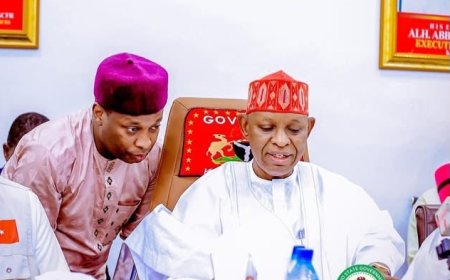
Sunusi Bature Dawakin Tofa: The Professional Journey of a Communication Strategist and His Place in Kano’s Governance Narrative
Beyond the title, the public statements and the demands of government communication lies a professional journey shaped by experience, institutional engagement and the evolving responsibility of public information.
 Admin
By Muhammad Zango
In contemporary governance, the importance of communication cannot be separated from the effectiveness of public administration. Government policies, development programmes and institutional decisions require more than formulation and implementation; they also require clarity, credibility, strategic presentation and an effective relationship between government and the people.

This is where the professional responsibilities of a government communicator become particularly significant.
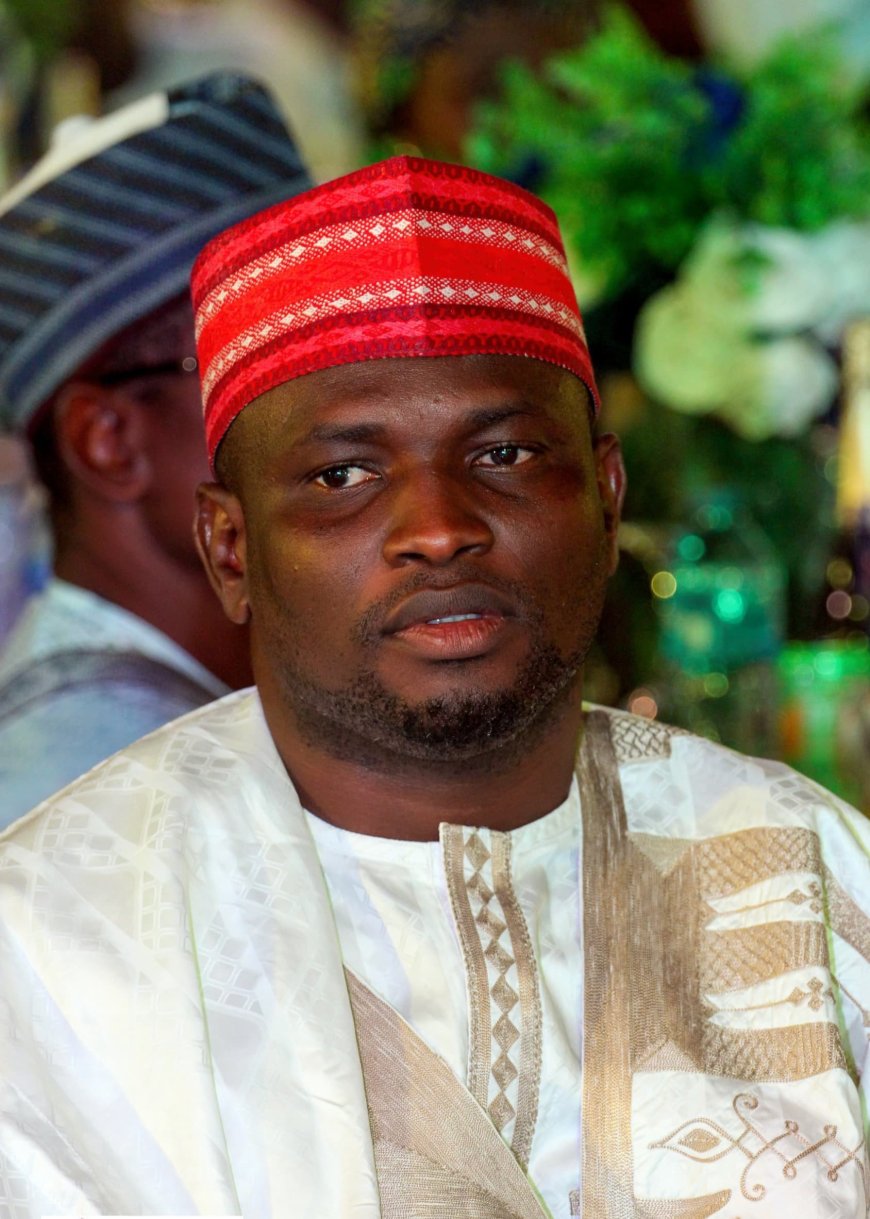
In Kano State, one individual whose professional journey has brought him into this important space is Malam Sunusi Bature Dawakin Tofa, the Director-General, Media and Publicity, Government House, Kano.
His emergence into the public communication structure of the present administration is not an isolated development. It follows a professional trajectory that reportedly spans journalism, international development, stakeholder engagement, corporate administration and strategic public relations.
Understanding his contribution therefore requires looking beyond his present designation to examine the professional experiences and institutional responsibilities that have shaped his career.
A PROFESSIONAL FOUNDATION BUILT ON COMMUNICATION
Sunusi Bature’s professional background reflects an engagement with communication in several dimensions.
His academic training includes a Bachelor’s degree in Mass Communication from the University of Maiduguri, alongside other qualifications in mass communication, public health education and promotion, social work and community development, and public relations.
This multidisciplinary educational background provides an important context for understanding his approach to communication, particularly in an environment where public information intersects with governance, social development and institutional relationships.
His professional experience has also reportedly included engagements with organisations such as the British Foreign, Commonwealth and Development Office, USAID, the Bill and Melinda Gates Foundation, Save the Children International, Discovery Learning Alliance and the Rockefeller Foundation.
These experiences exposed him to different institutional environments where communication, development advocacy, stakeholder coordination and public engagement form important components of organisational operations.
Such exposure is relevant to the demands of government communication, where the ability to understand different audiences and communicate institutional priorities remains essential.
FROM DEVELOPMENT COMMUNICATION TO GOVERNMENT HOUSE
One defining feature of Bature’s professional journey is the diversity of responsibilities he has undertaken.
His reported previous positions include Director of Stakeholder Engagement at the YieldWise Project, Country Programme Manager for the Girl Rising ENGAGE Project, State Project Coordinator for a maternal and child health campaign, and General Manager of Corporate Services at Dantata Foods and Allied Products Limited.
These positions demonstrate a career that extends beyond conventional media relations.
They involve areas of stakeholder management, organisational coordination, development communication and institutional engagement.
It is this combination of experiences that provides useful context for his transition into the public communication structure of Kano State.
On March 30, 2023, Governor-elect Abba Kabir Yusuf appointed him Chief Press Secretary for the transition period. His appointment was subsequently followed by his responsibilities within the administration.
He currently serves as Director-General, Media and Publicity, Government House, Kano.
THE RESPONSIBILITY OF COMMUNICATING GOVERNMENT
The office of the Director-General, Media and Publicity, is an important component of the Government House communication structure.
It requires an understanding of government operations, the ability to maintain professional relationships with journalists, effective coordination of public information and the responsibility to communicate official positions accurately.
The role also requires sensitivity to the relationship between government and citizens.
A government communicator must understand that public communication is not simply about issuing statements or responding to political developments. It is also about ensuring that citizens have access to relevant information concerning policies, programmes, decisions and public institutions.
In this regard, Bature’s office carries responsibilities that extend beyond publicity.
It occupies an important position in the relationship between the administration, the media and the wider public.
RECOGNITION AND PROFESSIONAL ENGAGEMENT
Professional recognition also forms part of Bature’s public career.
In December 2023, The Guardian reported that he received the Political Communicator of the Year award at an Arewa Agenda ceremony organised in partnership with PR Nigeria.
The recognition was associated with his political communication activities and stakeholder engagement.
He has also publicly engaged with media professionals and journalists on the importance of press freedom, constructive engagement and the contribution of the media to democratic development.
In September 2025, Voice of Nigeria reported his remarks reaffirming the Kano State Government’s commitment to press freedom and constructive engagement with journalists.
These engagements illustrate an important dimension of his responsibilities: maintaining a working relationship between public institutions and the media.
THE GOVERNMENT COMMUNICATOR AND THE PUBLIC INTEREST
The demands of contemporary governance have made strategic communication increasingly important.
Citizens want to understand what government is doing, why particular decisions are being taken, what benefits public programmes are expected to deliver and how public institutions respond to their concerns.
The responsibility of the government communicator is therefore not limited to presenting government activities in a favourable light.
It also involves accuracy, timeliness, accessibility and professional accountability.
For Bature, the challenge is to ensure that the communication machinery of Government House continues to serve as a reliable channel through which official information reaches the people.
It is equally important that the media retains the freedom to ask questions, examine public policies and hold institutions accountable.
A credible communication system benefits both government and citizens.
BEYOND THE OFFICE: THE LEGACY OF PROFESSIONAL SERVICE
Public appointments are temporary responsibilities, but professional conduct and institutional contributions can leave lasting impressions.
The significance of Sunusi Bature’s journey lies in the range of professional environments in which he has reportedly served and the different responsibilities he has undertaken before occupying his present office.
From development communication to corporate administration, from stakeholder engagement to public relations, his career offers an example of how professional experience can intersect with public service.
However, the enduring measure of his work will ultimately depend on the quality of communication institutions he helps strengthen, the professionalism of media engagement, the accuracy of information disseminated and the confidence citizens place in official communication.
CONCLUSION: COMMUNICATION AS AN INSTRUMENT OF RESPONSIBLE GOVERNANCE
Kano State occupies an important position in Nigeria’s political, commercial and social landscape. Its size, diversity and public expectations make effective government communication an essential part of responsible administration.
The office held by Sunusi Bature Dawakin Tofa consequently carries a responsibility that goes beyond personal recognition or official designation.
It requires professionalism, institutional discipline, intellectual depth and an appreciation of the public’s right to information.
His professional journey provides a useful basis for understanding the experience he brings to that responsibility.
Ultimately, the value of a government communicator should be reflected not merely in the number of statements issued or public appearances made, but in the credibility of information, the strength of institutional relationships and the quality of understanding established between government and society.
Because communication is not simply the voice of government; when properly practised, it becomes an essential bridge between public authority and public trust.
By Muhammad Zango