Air Peace Cabin Crew Member Challenges NSIB’s Drug Test Findings, Alleges Defamation
A shocking controversy has emerged in Nigeria’s aviation sector following the Nigerian Safety Investigation Bureau’s (NSIB) preliminary report on a serious incident involving an Air Peace Boeing 737-524 at Jeremiah Obafemi Awolowo International Airport on July 13, 2025.
 Admin
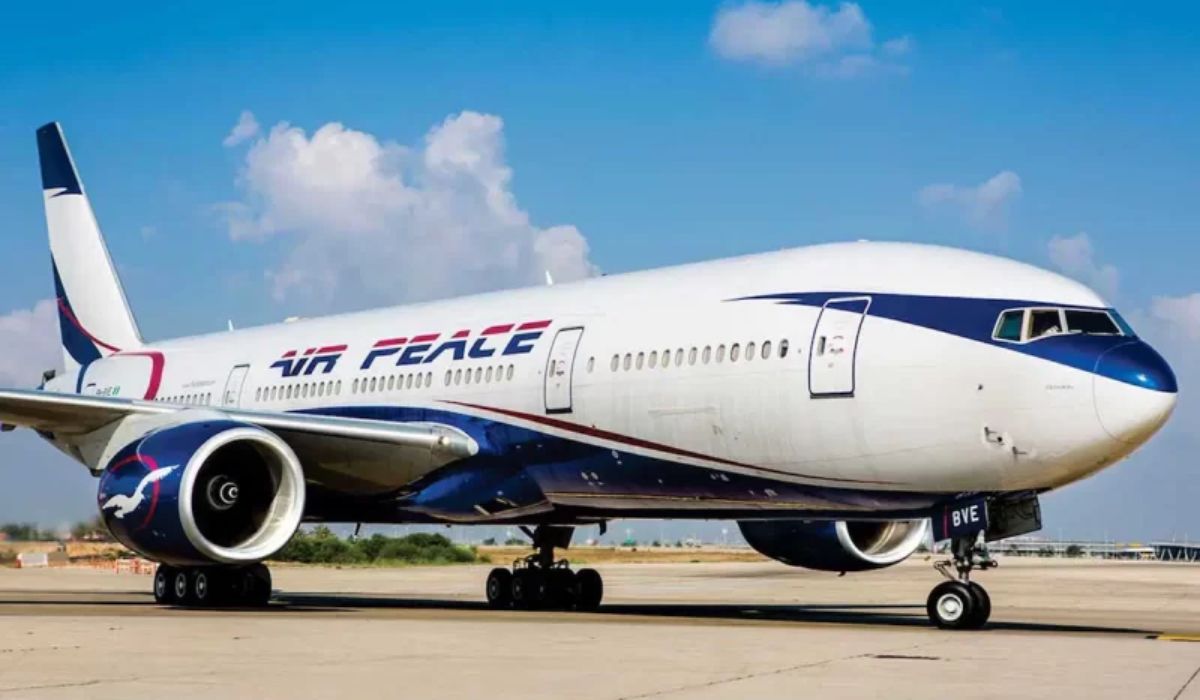
A shocking controversy has emerged in Nigeria’s aviation sector following the Nigerian Safety Investigation Bureau’s (NSIB) preliminary report on a serious incident involving an Air Peace Boeing 737-524 at Jeremiah Obafemi Awolowo International Airport on July 13, 2025.

Victory Maduneme, a cabin crew member on the flight, has come forward to dispute the NSIB’s claim that she tested positive for THC, the psychoactive component of cannabis, calling the report a “smearing campaign” that threatens her career and reputation.
In an interview on Arise television monitored by the news.ng, Maduneme recounted the events following the incident, where the aircraft, carrying 103 passengers and crew, landed long on Runway 21 after an unstabilized approach. She explained that the NSIB conducted tests hours after the landing.
“After we had landed and we had to wait for NSIB to come on board, then they came, started their investigation, and five hours later, they asked us to come into a room for them to do a test. So, we all went into the room, and our blood samples were taken, and our urine was also taken,” she said.
Maduneme expressed disbelief when she received a letter from the Nigerian Civil Aviation Authority (NCAA) on August 6, 2025, revealing the test results. “I was in utter shock to see what was in my result, actually,” she said, maintaining that the findings were impossible.
She promptly challenged the results, consulting a doctor who informed her that marijuana typically remains in the system for up to 90 days. The doctor advised her to delay a confirmatory test, but Maduneme insisted on immediate retesting to clear her name. “I was like, no, if I go back and come back later, it actually proves that yes, I have this kind of thing in my system,” she explained.
The confirmatory test, conducted at Cooper Aerospace Clinic under Dr. Adetunji, came back negative, contradicting the NSIB’s initial findings. Maduneme provided documentation of these results, emphasizing, “I did my test within a month, you can check it, and nothing was found in my system.” She questioned why the NSIB failed to inform Air Peace of the alleged positive result immediately, which she believes would have led to her suspension or license revocation.
“If marijuana was found in my system, were they not supposed to tell this to my airline, and they are supposed to stop me from flying? Why? Because I’m a risk to the passengers on board and my licence would have been taken away from me, but no, they didn’t inform them of this till after two months,” she said.
Maduneme accused the NSIB of damaging her reputation and Air Peace’s image, warning of legal action if the bureau does not retract its claims. “If NSIB has a smearing campaign against the airline, they should keep the innocent people away from this,” she stated. “And in the next 72 hours, if NSIB does not come and reiterate whatever they have said against me, then I think we should sue. This is really very bad. This is pure defamation of character.”
The cabin crew member also highlighted the severe consequences she narrowly avoided, crediting Air Peace’s management for their support. “If not for the kindness of my chairman, they would have sacked me and blacklisted me. And once that is done, no airline in the world, I repeat, no airline in the world will pick me because now they’ve painted me as this person that has a drug in her system,” she said.
This controversy raises questions about the NSIB’s testing procedures and transparency, as well as the potential impact on Air Peace’s reputation and the livelihoods of its crew. As Maduneme prepares to take legal action, the aviation community awaits the NSIB’s response and the final report, which could have far-reaching implications for safety protocols and accountability in Nigeria’s aviation industry.