
Cryptocurrency Wallet Development: Everything You Need to Know in 2026
Learn everything about cryptocurrency wallet development in 2026, including wallet types, features, security practices, costs, and emerging industry trends.
 clarawilson14
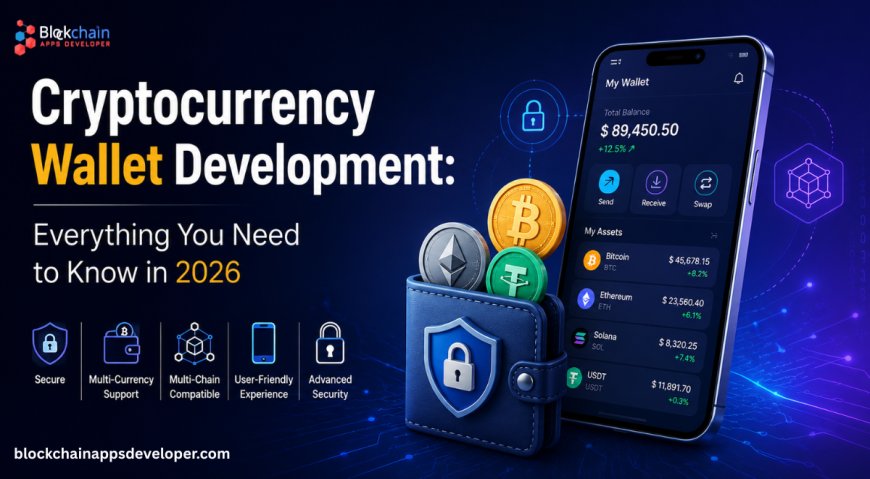
The cryptocurrency industry continues to evolve at a rapid pace, and digital wallets have become a fundamental part of the ecosystem. Whether users want to store Bitcoin, manage multiple digital assets, or interact with decentralized applications, a secure and user-friendly wallet is essential. As a result, cryptocurrency wallet development has become a major focus for businesses, startups, exchanges, and Web3 platforms in 2026.
This guide explores the basics of cryptocurrency wallet development, the different wallet types, key features, development processes, and emerging trends shaping the industry.

What Is Cryptocurrency Wallet Development?
Cryptocurrency wallet development is the process of creating digital applications that allow users to store, send, receive, and manage cryptocurrencies securely. Contrary to popular belief, crypto wallets do not physically store digital assets. Instead, they manage private and public keys that provide access to blockchain-based funds.
As blockchain adoption continues to grow, businesses are increasingly partnering with a cryptocurrency wallet development company to create secure wallet solutions that meet the demands of modern users.
Types of Cryptocurrency Wallets
Crypto wallets come in several forms, each designed to meet specific user needs.
Hot Wallets
Hot wallets remain connected to the internet, making them highly accessible for daily transactions. Mobile wallets and web wallets are common examples.
Cold Wallets
Cold wallets store private keys offline, providing enhanced security against cyber threats. Hardware wallets are among the most popular cold storage options.
Custodial Wallets
In custodial wallets, a third party manages the user's private keys. These wallets offer convenience but provide less control to the user.
Non-Custodial Wallets
Non-custodial wallets give users full ownership of their private keys and digital assets, making them a preferred choice for those who value decentralization and security.
Key Features of a Modern Cryptocurrency Wallet
The success of a wallet depends heavily on the features it offers. In 2026, users expect more than basic storage functionality.
Some of the most important wallet features include:
-
Multi-currency support for various cryptocurrencies
-
Secure login with two-factor authentication and biometrics
-
Real-time transaction tracking
-
QR code scanning for seamless transfers
-
Wallet backup and recovery options
-
Multi-signature security features
-
NFT storage and management
-
Cross-chain compatibility for different blockchain networks
A professional cryptocurrency wallet development company focuses on combining security, usability, and scalability to deliver a seamless user experience.
How Cryptocurrency Wallet Development Works
Developing a cryptocurrency wallet involves several important stages.
The process begins with requirement analysis, where developers identify business goals, target audiences, and desired wallet functionalities. This is followed by UI/UX design to create an intuitive user experience.
Next comes blockchain integration, which connects the wallet to one or multiple blockchain networks. Developers then implement essential security measures such as encryption, private key management, and authentication systems.
Before launch, the wallet undergoes extensive testing to ensure performance, security, and compatibility across devices. After deployment, continuous updates and maintenance help keep the wallet secure and aligned with industry developments.
Security Best Practices for Cryptocurrency Wallet Development
Security remains the most critical aspect of any cryptocurrency wallet.
A secure wallet should include strong encryption protocols, private key protection mechanisms, and multi-factor authentication. Many modern wallets also use biometric authentication such as fingerprint or facial recognition for additional security.
Regular security audits are equally important. These assessments help identify vulnerabilities before they can be exploited. Businesses that work with an experienced cryptocurrency wallet development company often benefit from advanced security frameworks and ongoing monitoring.
Benefits of Cryptocurrency Wallet Development
The demand for cryptocurrency wallets continues to increase because of the value they provide across different industries.
For startups, wallets create opportunities to launch innovative blockchain-based products. For enterprises, they enable secure digital asset management and payment solutions. Crypto exchanges rely on wallets to facilitate transactions, while DeFi platforms use them as gateways for decentralized financial services.
As more organizations enter the blockchain space, cryptocurrency wallet development is becoming a strategic investment rather than just a technical requirement.
Cryptocurrency Wallet Development Cost in 2026
The cost of developing a cryptocurrency wallet varies depending on several factors. Wallet complexity, supported blockchain networks, security requirements, custom features, and platform compatibility all influence the final budget.
Basic wallets with standard functionality typically require a lower investment, while enterprise-grade solutions with advanced security and multi-chain support involve higher development costs.
Businesses must carefully evaluate their requirements and long-term goals before choosing between custom development and white-label wallet solutions.
Latest Trends in Cryptocurrency Wallet Development
The cryptocurrency wallet landscape continues to evolve with emerging technologies.
Some of the most significant trends in 2026 include AI-powered wallet assistance, Multi-Party Computation (MPC) wallets, account abstraction, embedded wallets, and enhanced Web3 integrations. Cross-chain functionality is also becoming increasingly important as users interact with multiple blockchain ecosystems.
These innovations are making wallets more secure, accessible, and user-friendly than ever before.
Conclusion
Cryptocurrency wallet development plays a vital role in the growth of the digital asset ecosystem. As user expectations continue to evolve, businesses need wallet solutions that prioritize security, scalability, and ease of use. Whether you're building a wallet for a startup, exchange, DeFi platform, or enterprise application, partnering with an experienced cryptocurrency wallet development company can help ensure long-term success.
At BlockchainAppsDeveloper, we specialize in delivering secure, feature-rich, and scalable cryptocurrency wallet solutions tailored to diverse business requirements. Our expertise in blockchain technologies enables organizations to launch innovative wallet platforms that meet the demands of today's rapidly expanding crypto market.