ELECTION: A Personal Expression
Election contributes greatly to democratic governance. Direct democracy (a form of government in which political decisions are made directly by a group of competent citizens) is unrealistic in most modern societies. So this brings about democracy.
 Jan Bulo
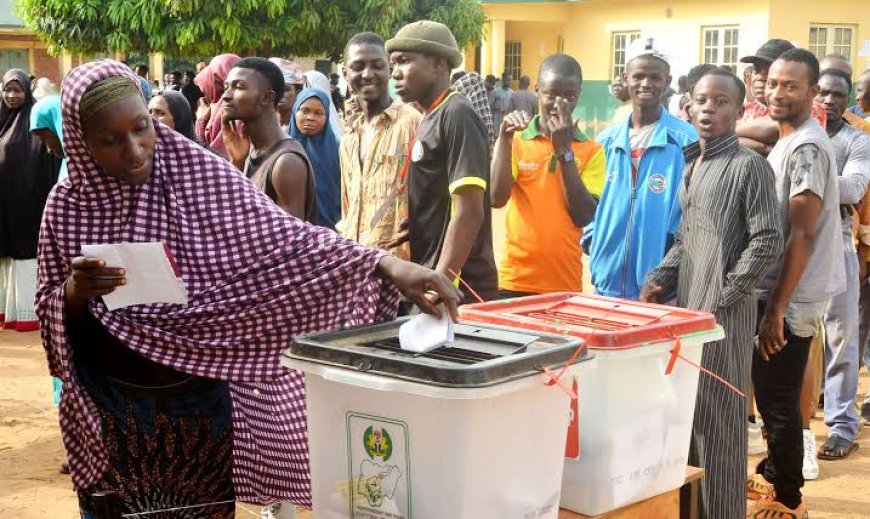
By Idris Shaawanatu Adam

Election contributes greatly to democratic governance. Direct democracy (a form of government in which political decisions are made directly by a group of competent citizens) is unrealistic in most modern societies.
So this brings about democracy. Democratic government is run by representatives and Elections allow voters to choose leaders and hold them accountable for their performance in office. Where elected leaders do not care whether they are re-elected, or where one political party or coalition is so dominant for historical or other reasons that voters choose to favor another candidate, party, or policy.
If you can't practically choose between the two, accountability may suffer. Nonetheless, the possibility of controlling leaders through the obligation to submit to regular and regular elections helps solve the problem of leadership succession and thus contributes to the survival of democracy. Besides, The highly competitive electoral process forces candidates and political parties to subject their achievements and future aspirations to public scrutiny, and elections serve as a forum to debate public issues and facilitate the expression of public opinion.
In this way, elections help educate citizens politically and ensure that democratic governments respond to the will of the people. They also help justify the actions of those in power. This function is also partially fulfilled through non-competitive elections.
Elections also strengthen the stability and legitimacy of political communities. Like national holidays that commemorate shared experiences, elections bring citizens together and affirm the viability of communities. Elections therefore help promote social and political integration.
Finally, elections serve a self-fulfilling purpose, affirming the worth and dignity of individual citizens as human beings.
Regardless of what else a voter needs, participating in elections helps boost voter self-esteem. Voting gives people a chance to express themselves and fulfill their need for affiliation by taking sides. Even not voting satisfies some people's need to demonstrate that they are alienated from the political community. For these very reasons, the long struggle for the right to vote and the demand for equal participation in elections can be seen as an expression of a deep human desire for personal growth.
Elections, whether in authoritarian or democratic regimes, have a ritual aspect. The election and the campaign that precedes it are dramatic events with rallies, banners, posters, buttons, headlines and television coverage, all of which draw attention to the importance of attending the event. Candidates, political parties, and interest groups representing various goals evoke symbols of nationalism or patriotism, reform or revolution, past glory or future promise. Elections, regardless of their particular national, regional, or local variation, break the monotony of everyday life and draw attention to our common destiny by arousing emotions and channeling them into collective symbols.