Putin’s Days May Be Numbered, but China’s the Bigger Threat, says Ex-CIA Chief
CIPHER BRIEF REPORTING — Someone other than Vladimir Putin will likely be running Russia in as little as three years. But the bigger concern, even [...] More The post Putin’s Days May Be Numbered, but China’s the Bigger Threat, says Ex-CIA Chief appeared first on The Cipher Brief.
 FirstHandNews
CIPHER BRIEF REPORTING — Someone other than Vladimir Putin will likely be running Russia in as little as three years. But the bigger concern, even for Europe, may lay further to the east.
That is the analysis of former CIA Director and Defense Secretary Leon Panetta, speaking on the eve of an expected Ukrainian counter-offensive and during the Ash Carter Exchange on Innovation and National Security in Washington D.C.

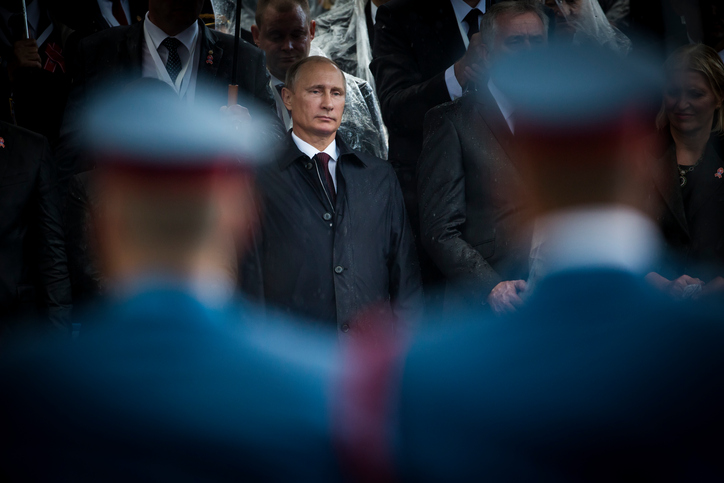
“I suspect that Putin is not going to be around in three to five years,” Panetta said, noting that he does not believe “Putin or his successor is going to be much of an issue in terms of impacting long-term Europe.”
For context, Putin, a former intelligence officer in East Germany, has been in power as Russia’s president or prime minister since 1999. And yet his stalled invasion of Ukraine; grumblings of discontent among senior Russian leadership; the growing influence in Moscow’s inner circles of those like Yevgeny Prigozhin, founder of the private military company, the Wagner group; as well as rumors of the Russian president’s declining health, have chipped away at Putin’s public image, as well as impressions of his strongman persona.
Still, more than 80 percent of Russians polled last month approved of his presidency, while the International Monetary Fund controversially expects Russia to avoid a recession this year, with 0.3% growth, despite the effects of widespread western sanctions – something the Kremlin has sought to stress as it begins preparations for Russia’s 2024 presidential campaign.
Putin, now 70, is expected to return to power.
The Cipher Brief hosts expert-level briefings on national security issues for Subscriber+Members that help provide context around today’s national security issues and what they mean for business. Upgrade your status to Subscriber+ today.
And yet his – or his successor’s – capacity to project broader Russian influence, even in Europe, Panetta noted, is no longer a principal western concern.
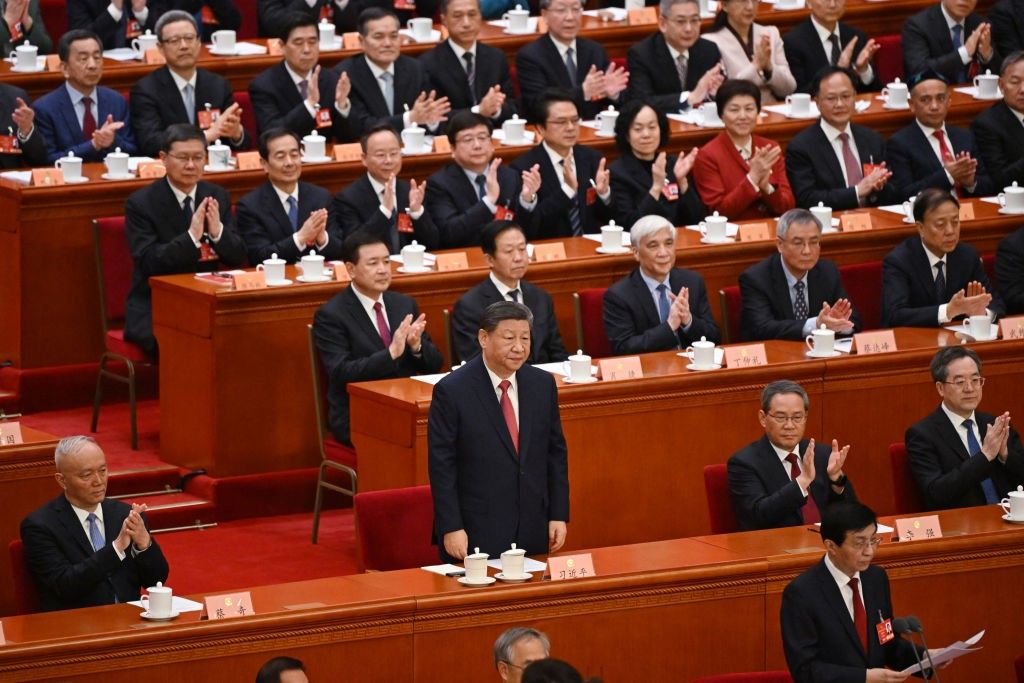
“I think Europe is going to be influenced a lot more by what [Chinese President Xi Jinping] does in China,” Panetta said. “I think Xi’s fundamental purpose is to divide Europe from the United States. That’s what Xi’s about. The visit with [French President Emanuel Macron] and the continuing efforts by China in Europe are basically designed to try to develop divisions between Europe and the United States. I think that is going to be the bigger threat in terms of a relationship with Europe and Europe’s relationship with itself.”
Following that three-day April visit to China, Macron called on Europe to reduce its dependency on the U.S., saying “the great risk” is getting caught up “in crises that are not ours, which prevents [Europe] from building its strategic autonomy” – a reference to growing Sino-US tensions over Taiwan, which Beijing claims as its own.
Those comments drew widespread backlash, though also accompanied ever-more strained relations between the U.S. and China, of which Europe has often been thrust in the middle.
Meanwhile, Chinese diplomatic efforts in Europe have been picking up steam. In February, senior Chinese foreign policy adviser Wang Yi toured France, Germany, Italy, and Hungary, with the stated intention to “intensify China-EU high level exchanges.” The focus was “to promote the stability and long-term development of China-EU relations,” which Yi reportedly described in a January edition of Qiushi, a leading official Chinese theoretical journal.
His tour followed a series of long-developing Chinese-driven diplomatic and economic exchanges on the continent, much of which began for ex-Soviet states following a 2012 summit in Poland, in which China developed what became known as the 16+1 initiative. There, Beijing largely focused efforts in Central and Eastern Europe through investment and infrastructure deals, which were – at the time – roundly criticized by western analysts as a kind of ‘Trojan Horse’ for Chinese influence across the region.
It’s not just for the President anymore. Are you getting your daily national security briefing? Subscriber+Members have exclusive access to the Open Source Collection Daily Brief, keeping you up to date on global events impacting national security. It pays to be a Subscriber+Member.
Still, despite concerns, in 2018, then EU High Representative for Foreign Affairs and Security Policy Federica Mogherini outlined a €500 billion initiative aimed at connecting Europe and Asia, with a host of projects, ranging from transport and energy to the digital economy.
And yet recently, those efforts have stalled. Last year, Latvia and Estonia exited the China-backed forum, effectively reducing the body by two members, and thus renaming it the ‘14+1 initiative.’
Problems, meanwhile, have persisted for the exclusive East Europe club.
Earlier this month, following a meeting between Czech foreign minister Jan Lipavský and U.S. Secretary of State Anthony Blinken, Lipavský effectively thanked his American counterpart for the “strategic leadership on China,” and then assured him “the 14+1 has neither substance nor future,” presumably complicated by Beijing’s “no limits” relationship with Moscow.
Despite President Xi’s March statement about “respecting the sovereignty of all countries,” which in some ways sought to underline China’s stated neutrality in the Ukraine war, Japanese Foreign Minister Yoshimasa Hayashi over the weekend claimed that China and Russia were actually “strengthening their military collaboration, including joint flights of their bombers and joint naval exercises in the vicinity of Japan.”
“Since the aggression of Russia to Ukraine, the security situation here in Europe and the security situation in the Pacific are not separable,” he noted.
“No question that China is the primary player in that relationship,” added Panetta during the last week’s forum in Washington D.C. “The key is going to rest with how we deal with Xi,” he added. “That’s going to be the challenge for the future, not so much the issue how we deal with Putin or his successor.”
The west’s advantage, he noted, comes – at least in part – as a result of fallout from the Ukraine war, in which “the relationship between the United States and NATO will grow stronger.”
“I think that relationship will create an even greater bond, a security bond, that will be very important in terms of the unity between the United States and Europe. I see NATO in many ways being the unifying element that will give us a better future, not only for Europe, but the United States and the relationship between the United States and Europe.”
It pays to be a Subscriber+Member with exclusive access to virtual briefings with leading experts and top officials in the national security and intelligence space.
The post Putin’s Days May Be Numbered, but China’s the Bigger Threat, says Ex-CIA Chief appeared first on The Cipher Brief.