RMAFC Commends President Tinubu’s Effort to Reduce Governance Costs, Urges State Govts to Follow Suit
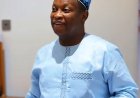
Dr. Muhammad Shehu Bello, Chairman of the Revenue Mobilisation Allocation and Fiscal Commission (RMAFC), has praised President Bola Tinubu’s recent directive to reduce the convoy sizes for ministers and chief executives as a positive step towards lowering the high cost of governance in Nigeria.
 Admin

Dr. Muhammad Shehu Bello, Chairman of the Revenue Mobilisation Allocation and Fiscal Commission (RMAFC), has praised President Bola Tinubu’s recent directive to reduce the convoy sizes for ministers and chief executives as a positive step towards lowering the high cost of governance in Nigeria.

In a statement released over the weekend, Dr. Bello urged state governments to adopt similar measures to further enhance fiscal responsibility across the country.
According to Dr. Bello, the high cost of governance has had wide-reaching negative impacts, including reduced investments, elevated unemployment, and rising insecurity.
He emphasized that large bureaucracies, duplicative government departments, and widespread corruption have led to excessive public spending, diverting resources away from critical infrastructure, healthcare, and social services.
Addressing these issues, he argued, requires a streamlined and cost-effective management approach to maximize national resources effectively.
The RMAFC chairman highlighted how governance costs have strained Nigeria’s economy, contributing to challenges such as inadequate infrastructure and a limited industrial sector.
Dr. Bello mentioned that the RMAFC has long been an advocate for reducing unnecessary governmental expenses and has provided recommendations at various levels to curb excessive spending.
He pointed to factors like inefficient public service delivery due to infrastructure issues, high-security costs tied to insurgencies, and extensive domestic and foreign debts as key contributors to Nigeria’s governance expenses.
Reflecting on efforts to reform, Dr Bello recommended swift action to implement the Oronsaye Report, which advised streamlining Nigeria’s government structures to eliminate redundant roles and agencies.
He also called for reduced political appointments and an updated remuneration package for public officials, both of which he believes are essential for improving the efficiency and sustainability of governance in Nigeria.
The RMAFC emphasized that governance cost reduction must be tackled by all three arms of government—executive, legislative, and judicial—to create a more effective and equitable public service system.
Dr. Bello noted that Nigeria’s governance costs are among the highest in Sub-Saharan Africa, hindering the government’s capacity to deliver critical services such as healthcare, education, and infrastructure improvements.
In a related development, former Senate Leader and Senator representing Borno South, Mohammed Ali Ndume, has praised President Tinubu‘s administration for its initiative to pursue de-dollarisation of the Nigerian economy, deeming it a courageous and necessary strategy.
In a statement issued to newsmen on Saturday, Ndume emphasized that with diligent implementation, the policy could significantly strengthen the naira and enhance trade relations with countries that do not rely heavily on the U.S. dollar.
De-dollarisation involves a marked reduction in the use of the U.S. dollar in international trade and financial dealings, leading to decreased demand for the currency at national, institutional, and corporate levels.