The World’s First AI Rule Book Has a ‘Need for Speed’
CIPHER BRIEF REPORTING — When it comes to artificial intelligence (AI), those who write the rules may be just as important as the innovators. Being [...] More The post The World’s First AI Rule Book Has a ‘Need for Speed’ appeared first on The Cipher Brief.
 FirstHandNews
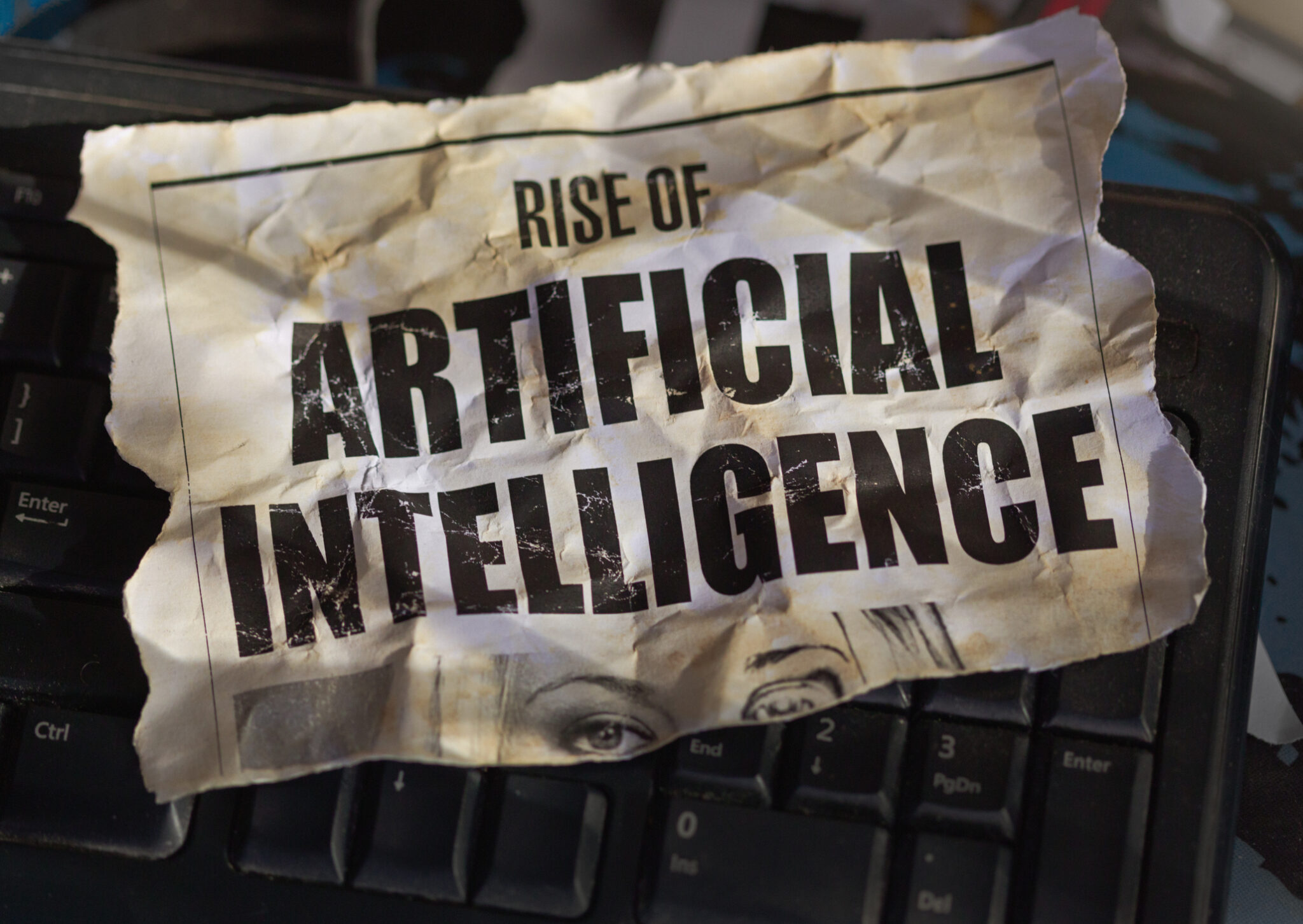
CIPHER BRIEF REPORTING — When it comes to artificial intelligence (AI), those who write the rules may be just as important as the innovators.
Being first, experts say, will likely afford competitive advantages – particularly in the security space – that devise global standards and align markets with the winner’s values and priorities.

When confronted with the speed of AI innovation along with Chinese competition, “there is no time to waste,” Executive Vice President of the European Commission Margrethe Vestager said this week, ahead of a critical vote in the French city of Strasbourg, the official seat of the European Parliament.
Designed to drum up the world’s first AI rulebook, the proposed Artificial Intelligence Act is a far-reaching legal framework aimed at strengthening AI governance across a wide range of sectors, which certainly has rivals watching as they tinker with their own versions. “What I think is important is speed,” Vestager added.
But the commission, which first unveiled regulatory proposals in 2021, has been slow to adopt such measures, thought to be critical in cementing the ethics, safety and reliability standards, as well as basic transparency of emergent AI systems. Still, as the race to regulate unfolds, no two approaches are the same.
With Europeans focused on more tailored legislation, homing in on phrases such as “purposeful manipulation,” “emotion recognition,” and “predictive policing,” the U.S. approach is more “highly distributed across federal agencies,” with “many adapting to AI without new legal authorities,” according to a recent Brookings Institution report.
“It’s not going to be one size fits all,” Lt. Gen Michael Groen, former Director of the U.S. Joint Artificial Intelligence Center, told The Cipher Brief regarding the U.S. approach. “It’s not all going to be a strict regulatory agency model. There are some great opportunities here for industry and government to get together [and] set standards that are good for both.”
While officials say they hope the two systems remain interoperable, the “light touch” method, emblematic of the U.S. tact, presents a marked difference.
“The light touch is possible, but no lighter than what’s needed,” said Brian Scott, Deputy Assistant National Cyber Director for Cyber Policy and Programs, at this year’s RSA conference in San Francisco. “So that’s a key piece. As we develop these regulations, we should be looking at … risk-informed, performance-based, outcome-focused, and really … in consultation with those that are regulated.”
Be it legislatively-focused or agency directed, the adoption of a rules-based framework is nonetheless thought to be a critical next phase of a technology Bill Gates predicts will ultimately be more influential than the personal computing revolution.
And that is something of which Beijing has taken note, having already articulated its early AI regulation efforts back in 2017. In fact, in a bid to take an early lead as an AI global leader, the Chinese Communist Party had set forth a plan, pegged to 2030, at developing China as “a principal world center for artificial intelligence innovation,” which would launch it to “the forefront of innovative countries and an economic power.” Since then, the AI sector in China has rapidly expanded into a multi-billion dollar industry, producing an estimated one-third of all AI journal papers and citations from 2021.
It’s not just for the President anymore. Are you getting your daily national security briefing? Subscriber+Members have exclusive access to the Open Source Collection Daily Brief, keeping you up to date on global events impacting national security. It pays to be a Subscriber+Member.
Meanwhile, Chinese efforts to catch up to more recent AI-powered technologies, such as OpenAI’s ChatGPT – the popular artificial intelligence chatbot that boasts more than 100 active million users – have been gaining steam. In April, Alibaba Cloud – a subsidiary of the Chinese multinational technology company Alibaba Group, announced the roll-out of its own AI-powered chatbot, Tongyi Qianwen, while the Beijing-headquartered Baidu offered up a similar rival. Simultaneously, Chinese telecommunications manufacturer Huawei and others, are thought to be pressing state-of-the-art AI products with fewer or less capable semiconductors; a move designed to end-run U.S. sanctions on the materials and machines needed for advanced AI development.
Thus, as China looks to answer questions surrounding supply chains and innovation, regulation – it would seem – is a logical next step. In fact, this week promises to be a big week for Beijing, with Chinese authorities set close a second round of AI regulation on Wednesday, following last month’s release of draft rules designed to oversee generative AI technologies. But devising universal standards is a complex feat, involving an inclusive and ever-evolving skeleton of privacy and accountability concerns, as well as aspects of social media governance, management of cellular networks, and other technologies.
Last month, the Biden administration said it was seeking public comments on AI accountability procedures in the U.S., following calls from ethics groups, including the Center for Artificial Intelligence and Digital Policy, which petitioned the U.S. Federal Trade Commission to stop OpenAI from the continued commercial release of GPT-4, claiming it was “biased, deceptive, and a risk to privacy and public safety.”
“Responsible AI systems could bring enormous benefits, but only if we address their potential consequences and harms,” said NTIA Administrator Alan Davidson in a statement. “For these systems to reach their full potential, companies and consumers need to be able to trust them.”
It pays to be a Subscriber+Member with exclusive access to virtual briefings with leading experts and top officials in the national security and intelligence space.
Overall, however, a growing realization among security experts suggests that “there is no putting this genie back in the bottle.” That’s according to Susan M. Gordon, former Principal Deputy Director of National Intelligence, who spoke with The Cipher Brief in a separate interview.
“Ideas about slowing it, stopping it, impeding it, that just isn’t going to happen.”
And yet, she added, worries that “the free world is going to end because of this technology” should also be put aside, given America’s track record of finding “a way to manage.”
“With respect to AI, it’s a great time to have a discussion from a national security perspective… with those who are “developing [this technology] at an incredible rate of speed.”
The Hon. Susan M. Gordon, Former Principal Deputy Director of National Intelligence (PDDNI)

The Hon. Susan M. Gordon is a retired career intelligence officer having spent more than 27 years at the CIA, serving as Deputy Director of the National Geospatial-Intelligence Agency and as the fifth Principal Deputy Director of National Intelligence (PDDNI), a Congressionally-approved position, before retiring from government service. In 1998, she designed and drove the formation of In-Q-Tel, a private, non-profit company whose primary purpose is to deliver innovative technology solutions for the agency and the IC. She currently serves on a number of boards, including the Defense Innovation Board and is a partner at Gordon Ventures.
Lt Gen. Michael Groen (US Marine Corps, Ret.), Former Director, Joint Artificial Intelligence Center

Lieutenant General Michael Groen (US Marine Corps, Ret.) served over 36 years in the U.S. military, culminating his career as the senior executive for AI in the Department. Groen also served in the National Security Agency overseeing Computer Network Operations, and as the Director of Joint Staff Intelligence, working closely with the Chairman and Senior Leaders across the Department. He is an experienced Marine commander and multi-tour combat veteran. Groen earned Masters Degrees in Electrical Engineering and Applied Physics from the Naval Postgraduate School
Cipher Brief Cyber Editor Ken Hughes contributed to this report.
Read more expert-driven national security insights, perspectives and analysis in The Cipher Brief because National Security is Everyone’s Business
The post The World’s First AI Rule Book Has a ‘Need for Speed’ appeared first on The Cipher Brief.