Presidential CNG Initiative Sees Over 100,000 Vehicle Conversions, $200 Million Investment
The Presidency has revealed that over 100,000 vehicles have been successfully converted from petrol to Compressed Natural Gas (CNG)/bi-fuel under the Presidential CNG Initiative (PCNGI).
 Admin
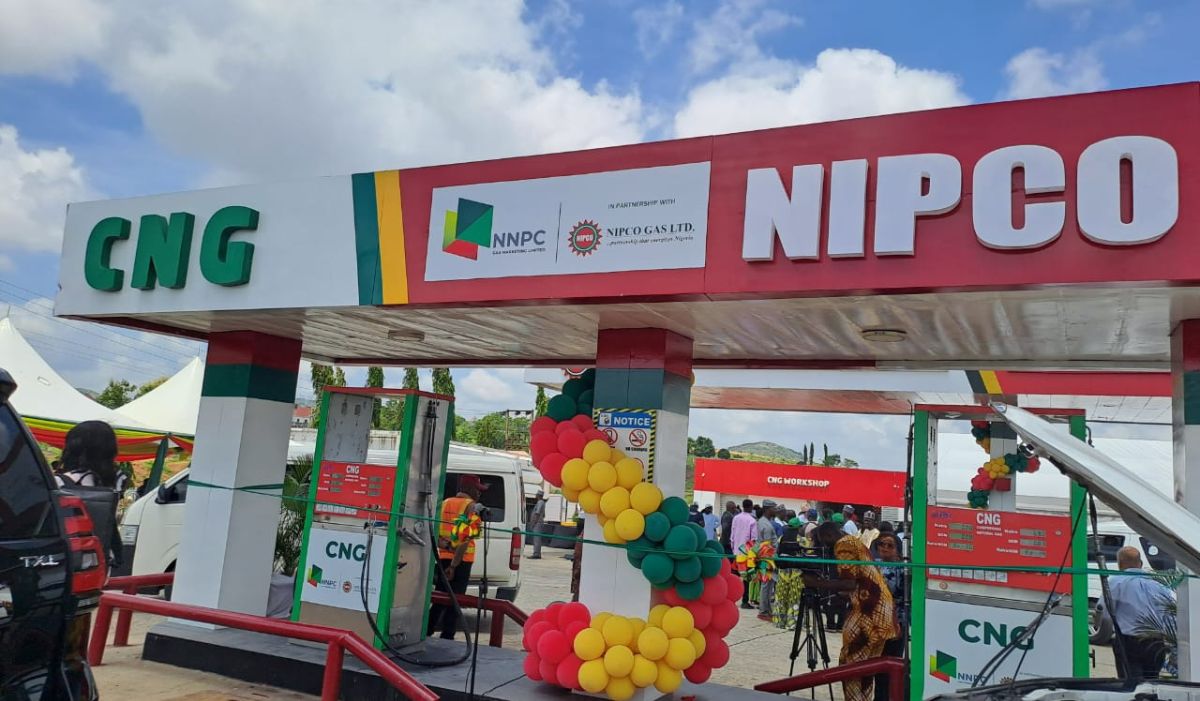
The Presidency has revealed that over 100,000 vehicles have been successfully converted from petrol to Compressed Natural Gas (CNG)/bi-fuel under the Presidential CNG Initiative (PCNGI).

The milestone comes as part of an ongoing effort to offer a cheaper, cleaner energy alternative for Nigerians, especially in response to the rising costs following the fuel subsidy removal.
A statement from the Project Director and CEO of PCNGI, Michael Oluwagbemi, provided an update on the initiative’s progress, noting that the response from the public has been overwhelmingly positive.
The initiative, which was launched by President Bola Tinubu, aims to provide a sustainable energy solution that significantly reduces fuel costs.
Since its inception, more than 60% of Nigerian vehicle owners who switched to CNG have reported saving up to 60% on their fuel expenses.
As part of the initiative’s expansion, the number of CNG conversion centres has grown from just seven in 2023 to over 140 nationwide.
The increase in facilities has been accompanied by significant private sector investment, with over $200 million already directed towards developing CNG infrastructure across the country.
Oluwagbemi also highlighted the creation of thousands of new jobs, as many Nigerians are employed at the conversion centres.
“The private sector alone has invested over N2 billion into these centres in the past year.
“In the next three years, additional investments ranging from N6 billion to N10 billion will be directed toward setting up more conversion centres,” he said.
He added that the goal is to establish 1,000 centres, significantly transforming Nigeria’s energy dynamics.
The PCNGI initiative is also providing significant incentives for commercial vehicle owners, with the conversion of these vehicles being completely free under the President’s Conversion Incentive Programme.
The programme aims to convert one million commercial vehicles to CNG/bi-fuel over the next three years, with support from the National Union of Road Transport Workers (NURTW), which has publicly acknowledged the program’s success.
The statement also dispelled misinformation regarding the ease of conversion, noting that CNG kits are compatible with older vehicles.
Oluwagbemi said this has been demonstrated in Lagos, where old yellow buses were successfully converted.
He cited the example of other countries like Egypt, India, and Iran, where older vehicles have operated more efficiently on CNG than on petrol.
In addition to vehicle conversions, the CNG distribution network is also growing.
The establishment of 75 new daughter stations across the country is underway, supported by over $175 million in investments into mother stations over the past year.
The private sector, in collaboration with regulatory bodies, is also setting up mobile refuelling units to increase access to CNG.
Oluwagbemi also stated that the government has been proactive in adopting CNG for its fleets.
“Government agencies such as the Nigerian Army, the Nigeria Police Force, and the Federal Road Maintenance Agency (FERMA) have already begun converting their vehicles to CNG.
“Furthermore, President Tinubu has directed that only CNG-enabled vehicles should be purchased by government agencies moving forward,” he stated.
Oluwagbemi concluded by stating that the CNG initiative is not only an environmental and economic boon for the country but also a critical step in enhancing Nigeria’s energy security.
He expressed confidence that the program’s continued success would save the nation approximately $3 billion in fuel subsidies over the next few years, while also generating an additional $2 billion in revenue.